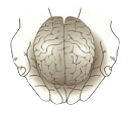
"The actions of the brain underlie all of the complex cognitive actions that we believe are quintessentially human, such as thinking, speaking and creating works of art. As a corollary, all of the behavioural disorders that characterise psychiatric illness - disorders of affect (feeling) and cognition (thought) - are disturbances of brain function."
Eric R. Kandel, Principles of Neural Science, 4th Edition, Recipient of the 2000 Nobel Prize in Physiology or Medicine
The Institute of Functional Neuroscience was established in 2008 to help improve the health and lifestyles of patients suffering from Migraines, Epilepsy, Seizures, Anxiety, Strokes, Tinnitus, Attention Deficit Hyperactivity Disorder (ADHD), Obsessive Compulsive Disorder (OCD), Vertigo, Dysautonomia and Autism.
The Institute works closely with medical and other health care practitioners to find solutions to neurologic cases which are not responding satisfactorily to established treatment protocols, and directly with patients for whom a medical diagnosis is inconclusive.
Historically, the search for the cause of disorders of the nervous system has focused on finding morphologic (physical) or chemical abnormalities. However, advanced research in the field of neuroscience emanating from Harvard University, Columbia University, the Carrick Institute for Graduate Studies and the University of Cambridge is revealing previously unrecognised aberrations in neurologic integration or function as contributing factors.
Building on this research, the Institute has introduced the use of sophisticated, non-invasive diagnostic technology, including Qualitative Electroencephalography (QEEG), and Low-resolution Electromagnetic Tomography (LORETA), to detect underlying functional brain abnormalities which are not generally observed or measured with standard clinical testing.
By tracking the functional status or central integrative state of a patient's unique brain patterns, clinicians at the Institute are able to identify abnormal neurologic pathways that may be involved in a patient's failure to respond, or prove to the be underlying cause.
Once the nature of a patient's neurologic dysfunction has been explored and understood, a strategy for normalising neural integration is implemented using conservative, evidence-based sensory, motor, auditory and visual stimulation techniques.
By taking a different perspective the Institute focuses on the things that are important: the freedom to enjoy life, to love your family and to pursue your dreams. If you would like the Insitute to consider taking your case - or that of someone you know - please call +61 (8) 6254 2282 for further information